
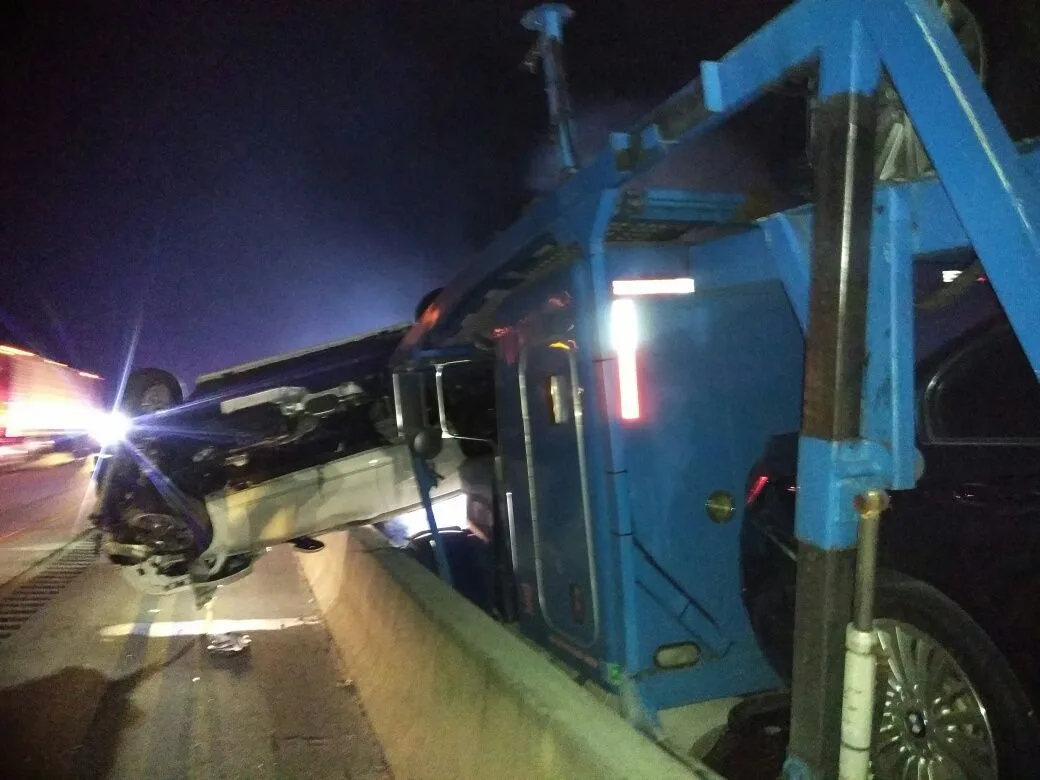
The Wreck Is Hooked. Now The Lanes Get Swept.
Once the vehicles are on our trucks, the road still carries glass, broken parts, leaked fluid and sometimes a scattered load. Around Apopka and northwest Orange County, our crews clear that work inside the scene law enforcement sets, so the lanes can go back to traffic.
Cleanup
What A Crash Leaves On The Pavement.
Towing the wrecked vehicles is the part everyone sees. What stays behind is less obvious and takes longer: windshield glass spread across two lanes, a bumper cover in the median, headlight shards, a mirror, pieces of a fender liner, and a slick of whatever leaked out of the engine bay. On a commercial wreck the list grows, with mud flaps, trailer parts and sometimes a good share of the load.
None of that can stay on a road like SR-429 or US-441. Loose parts get kicked up by the next truck through, and fine glass keeps puncturing tires long after the patrol cars leave. A lane that looks clear from a squad car can still be covered in small pieces once somebody actually walks it.
So our crews walk it. After the vehicles are hooked and secured, the operators pick up the large pieces by hand, sweep the glass and small debris, and check the shoulder and the curb line where things roll. Everything we gather goes with the wreck or into our truck, never shoved onto the grass for someone else to find. A lane reopens sooner when cleanup starts the moment the last vehicle is chained.
The Scene Belongs To Whoever Set It.
An accident scene has someone in charge, and it is almost never the tow crew. Law enforcement or the fire department decides where the closure starts, which lanes stay open and when the road goes back to traffic. Our work happens inside that space, on their timing.
- Our trucks park where the officer directs, usually where they shield the people working on foot.
- Cleanup begins when the person running the scene says the vehicles can move and the area is ours to work.
- When the crew finishes, we tell the officer and let them reopen the lane.
If you are calling from the scene yourself and anyone is hurt, or a lane is still live with traffic moving past the wreck, call 911 first. Our yard is in Melbourne, roughly 85 miles from Apopka, and a dangerous scene needs the nearest help there is. Call us for the work that follows, once the responders have the road in hand.
Fluids Get Contained Before They Spread.
Crashed vehicles leak. Coolant, motor oil, transmission fluid and diesel from a punctured tank all end up on the pavement, and on a hot road surface they spread fast and stay slick. Containing them is part of clearing the scene, the same as the glass.
Our crews put absorbent down on the spill, work it in, then sweep it up and bag it so it leaves with us. A line of absorbent along the low edge keeps a spill from running toward a drain or onto the shoulder while the rest is handled. Summer storms make this harder. Standing water across a low stretch carries a sheen much further than dry pavement would.
There is a limit to this work, and we keep to it. If the spill involves hazardous material, or more fuel than absorbent can safely handle, the specialists the scene commander calls take it. Our crews stay clear of that and pick up the vehicle and debris work once the area is handed back to us. Tell dispatch what was leaking so we arrive knowing.
Spilled Freight Waits For Its Owner.
When a commercial vehicle goes down, part of the load often comes with it: boxes off a broken pallet, bagged material across a lane, parts out of a delivery truck. That freight belongs to somebody, and it is not ours to throw away.
Our crews gather the spilled cargo and stage it off the travel lanes, clear of traffic and of the responders. From there it goes where the carrier or the owner decides. Sometimes they send another truck to collect it. Sometimes it rides to our yard with the wreck until someone can sort out what is still good. Damaged material the owner releases gets loaded and hauled off, so nothing is left at the roadside.
Dispatch will ask whether the carrier knows yet and whether anyone is sending a truck. If nobody has decided at that point, that is normal. We stage the load safely and hold it until somebody does.
Photos For The Carrier, Then The Broom.
After a commercial wreck, several people will want to know what the road looked like. The carrier, the vehicle owner, the shipper and at least one insurer end up asking the same questions weeks later, and the answers depend on a record made before anything was swept.
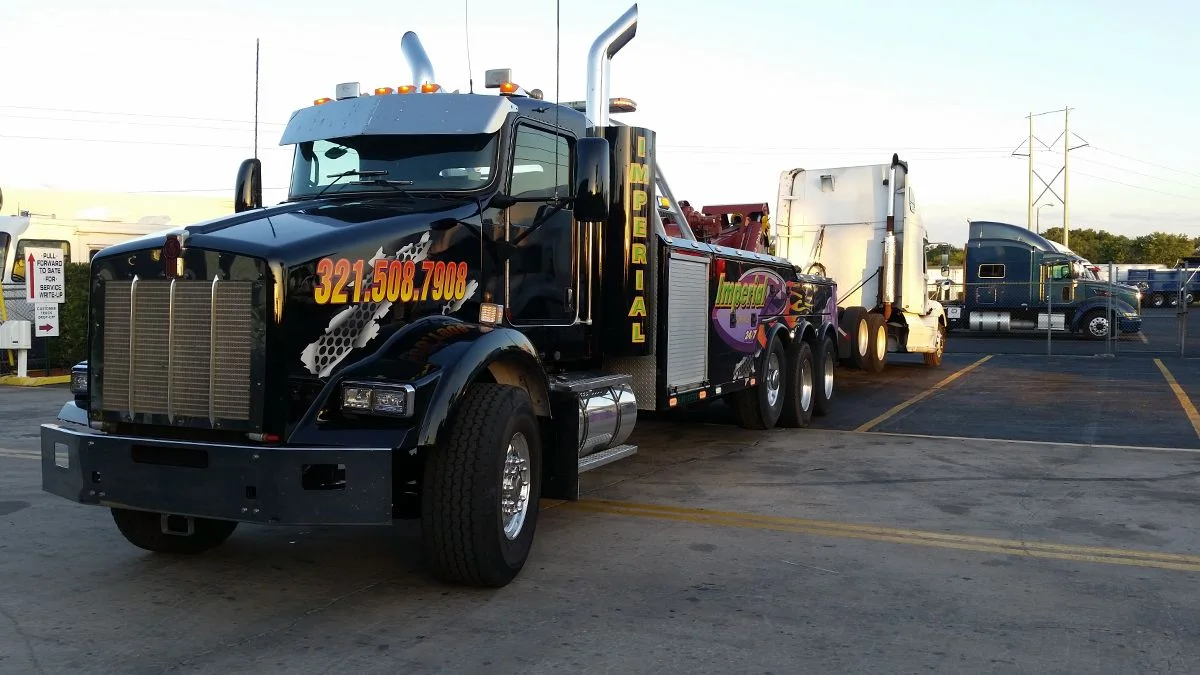
So once the area is handed to us, our crew photographs it as it lies: where the debris landed, the spill before absorbent goes down and the freight where it fell. If a carrier or insurer wants its own representative to take pictures first, tell dispatch and we will wait as long as the officer in charge allows.
More about this work is on our accident scene cleanup page. If a scene near Apopka is under control and still needs clearing, tell dispatch where it is and we will plan the crew with you.
The Rest Of Our Apopka Heavy Work
Tractor-Trailer Towing
Whole rigs or just the tractor, hooked right.
Open the page →Fleet Roadside Assistance
Fleet trucks fixed on the shoulder when possible.
Open the page →Construction Equipment Transport
Site-to-site moves on a lowboy.
Open the page →Machinery Moving
Compressors and shop machines hauled safely.
Open the page →Apopka Overview
How we cover heavy calls in Apopka.
Open the page →Orange County
Commercial wrecks cleared countywide.
Open the page →Six Things Callers Ask About Scene Cleanup.
Do you clean up the road after the vehicles are towed?
Do you handle hazardous material spills?
What do you do about oil and coolant on the pavement?
What happens to cargo that fell off the truck?
Will you take photos for the insurance company?
Should I call you or 911 first?
Most cleanup calls near Apopka come from carriers and fleet managers after a commercial wreck on one of the expressways. When you call, tell dispatch which lanes are closed, what leaked and whether freight is on the ground. Those three details decide how much absorbent, how many hands and how much truck space the crew brings.
Debris Still On The Road? We Can Finish The Job.
Tell us where the scene is, who is running it and what is on the pavement. Dispatch will tell you which crew leaves Melbourne and how long the drive runs, and give you a straight, no-surprise price on the cleanup before anyone rolls. Our other heavy work here is on the Apopka page, or contact dispatch online for a callback.
Our crews at work on real jobs are in the gallery.