Cocoa Collision Towing, Done In The Right Order.
A crash on a road through Cocoa leaves a blocked lane, an officer taking statements, and a car that ran fine this morning and now needs a winch to move. Imperial Towing has cleared wrecks for Brevard County drivers for 28 years, and dispatch picks up every hour of every day, holidays and bad weather included.
Wrecks
A Crash In Town Stops Everything.
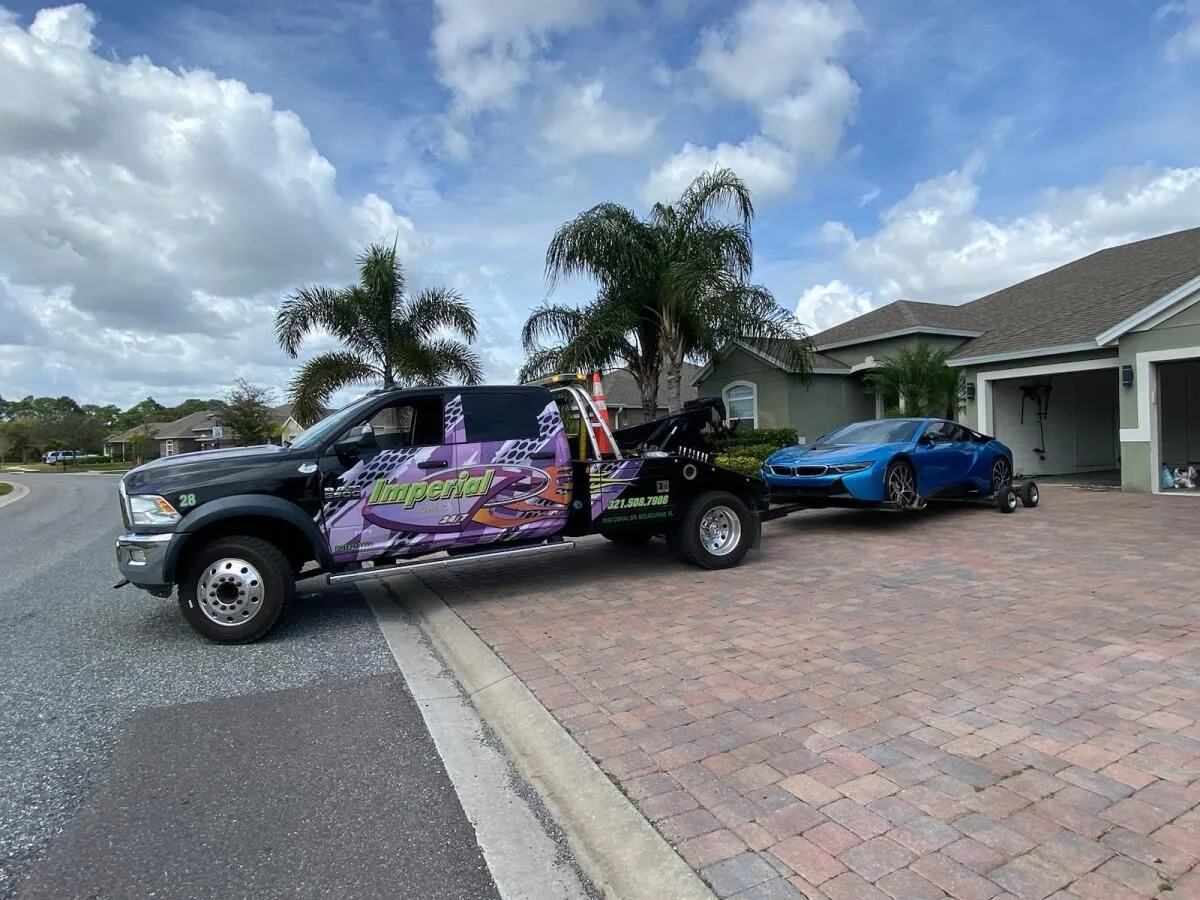
A collision in town freezes a lot more than two cars. Traffic stacks up behind it, drivers start easing around the debris, and nobody really goes anywhere until the damaged vehicles are off the pavement. Clearing them carefully, without wasted minutes, is the whole job.
Cocoa sits close enough to us that our certified operators run its streets every week. That familiarity counts for the most on a wreck. The driver heading your way already knows how to reach a busy street, a neighborhood, or a business lot, and they spend the drive thinking about where to set the truck instead of reading a map.
Some of what we see is small. A curb strike bends a wheel, or a soft shoulder gives under a tire and drops a car into the grass. Some of it is a real collision with two or three cars involved. The call starts the same way no matter which: get yourself clear of traffic, check on everyone, and then pick up the phone. If the car simply quit and nobody hit anything, our Cocoa emergency towing page is the better read.
If anybody is hurt, 911 comes before any tow call, every time. The truck can wait. Once people are looked after and out of the travel lane, call us and tell dispatch how many vehicles are involved and whether any of them are still sitting across traffic, because that decides whether one truck is enough.
Taking Direction From The Officer On Scene.
A wreck brings people who each have a job. Police are documenting what happened, sometimes an ambulance or a fire truck is parked across the same lanes, and the tow truck is usually the last vehicle to show up. We handle police and municipal towing across the county, including the City of Melbourne contract, so our operators know the order a scene runs in and where they fit inside it.
In practice it looks quiet. The truck stages out of the way. The operator checks in with the officer and waits until the scene is ready for them. Nobody runs a cable while somebody is still standing in its path, and nobody pulls a car before the officer has what they need from it.
Your part is smaller than you might expect. Trade information, answer the questions you are asked, call the people who are waiting to hear from you. If you already know the shop you want, or something you care about is still inside the car, tell the operator when they walk up. That one sentence saves a lot of back and forth later.
Some smaller bumps never bring an officer at all. A low-speed tap in a parking lot can end with two drivers swapping insurance cards and one car that should not be driven home. That call is simpler, and it gets the same care, starting with an honest look at whether the car should be driven another foot.
When The Car Will Not Roll Or Steer.
A breakdown and a wreck can look alike from the curb. They load very differently. A car with a dead alternator still rolls, still steers, and still has its normal hook points. A car that took a hit may have a locked wheel, a bent tie rod, a bumper cover hanging by one clip, and a frame that is no longer quite where it used to be.
So the operator slows down. The car gets winched aboard a little at a time while they watch what the pull does to the damaged side. Straps go on the parts of the car that came through the impact intact. Loose panels get secured or taken off so nothing drops onto the road on the ride, and broken glass and trim get swept up before the truck pulls out.
All of that is for your claim as much as for the car. An adjuster is going to look at that vehicle and decide what happened to it, and it should arrive looking exactly like the wreck it was. More on how we handle collision work around the county is on our accident towing page.
- Winched aboard: for a car that will not roll, steer, or brake after the hit.
- Strapped to sound metal: attachment on the parts that survived, never the crumpled ones.
- Road left clean: glass and plastic picked up before we leave the lane.
- Clean records: we note what was moved, from where, and to where.
Drivable Is A Judgment Call.
Plenty of people look at a dented fender, notice the engine still runs, and figure they can limp the car home. Sometimes that works out. Often the damage that matters is the part nobody sees from the curb: a cracked radiator, a bent control arm, a wheel knocked out of line, a headlight that now points at the pavement.
So before anything moves, the operator walks around the car with you. Fluid dripping under the engine means it rides on the deck. So does a tire rubbing against bent sheet metal, because a few blocks of that can shred it. A steering wheel sitting off center after the hit, a warning light that came on at impact, or an airbag that went off all point the same way.
Loading a car like that takes longer than hooking up an ordinary breakdown, and the extra minutes are worth it. A leak trailing down the road leaves a slick spot for the next driver, and a tire that lets go on the way home can turn one wreck into two. When there is any doubt, the car goes on the flatbed.
It helps the claim too. A car that arrives at the shop on a flatbed carries only the damage from the crash. One that was driven across town first may show up with a ruined tire and a scraped rim, and the adjuster will want to know which damage came from where.
Where The Car Spends Tonight.
The first question after a wreck is whether everyone is alright. The second is usually where the car goes, and that answer belongs to you. If you have a shop you trust, we take it there. A body shop, a dealer, a storage yard while the claim gets sorted, or your own driveway all work fine, and if you have not decided yet, storage buys you time to talk with your insurance company first.
Money gets settled on the first call. You hear a straight, no-surprise price on your tow before the truck rolls, based on the vehicle, the distance, and anything unusual about the pickup. Everything else we run in town is on our Cocoa towing page.
Just had a wreck in Cocoa? Get clear of traffic, then call (321) 499-4610 or send us the location and a truck starts moving.
What People Ask After A Cocoa Wreck.
Can I pick the tow company after a Cocoa crash?
Why does a wrecked car take longer to load?
Can I drive my car home if it still starts after the crash?
What if the body shop is closed when you arrive?
What will my insurance adjuster want from the tow?
Will you wait until the police are done with the car?
Crashed In Cocoa? Hand Us The Car.
Tell dispatch where you are and where the car needs to end up. Once the officer clears the scene, a certified Imperial operator takes the car to the shop, the storage yard, or your driveway and handles the damage with care the whole way there. We have worked wrecks across Brevard County for 28 years, and Cocoa is right in our backyard.
See the fleet working real jobs in the photo gallery.