

Cocoa Beach Collision Towing, For The Worst Ten Minutes.
You are standing on the shoulder, the car is finished, and somebody has to move it before anything else can happen. That is our part of the job, and we have been doing it for Brevard County drivers for 28 years, 24 hours a day, every day of the year, on the island and everywhere else we run.
Collision
The Part Nobody Plans For.
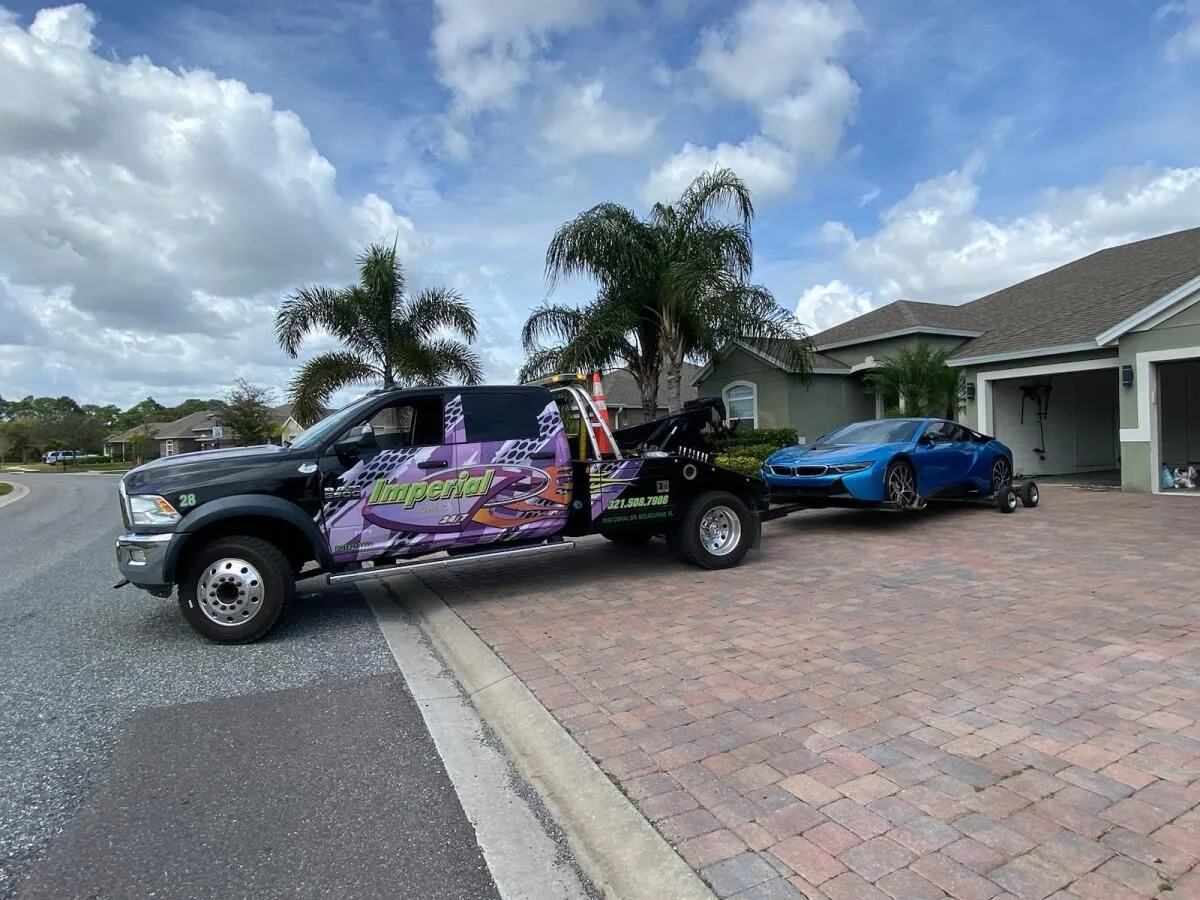
Nobody leaves the house planning to hand their car to a tow operator. Then it happens, and suddenly there are decisions to make while your hands are still shaking. Imperial has been taking that weight off Brevard County drivers for 28 years, and Cocoa Beach is right in our back yard, so the truck that shows up belongs to a crew that already knows the island.
Our operators are certified, our fleet is well kept, and dispatch answers 24 hours a day, every day of the year. On a collision call that combination matters more than it does on a flat tire. You want somebody who has done this hundreds of times, who does not need directions, and who can tell you what happens next without guessing at it.
The other thing a wreck takes from you is the ability to think in order. There is the car, the other driver, the officer, your phone, the people expecting you somewhere. Handing one whole item on that list to somebody who does this for a living is worth more in the moment than most people expect, and it is the reason this page exists at all: so you know who to call before you ever need the number.
On The Island, Everything Is Close.
A barrier island is a narrow place. There is water on both sides, a limited number of ways on and off, and traffic that has nowhere to spread out when a lane closes. A wreck that would be an inconvenience on a wide mainland road becomes a genuine backup here in a few minutes, which is why clearing it quickly is part of the service rather than an afterthought.
Our operators run Cocoa Beach roads every week, and being local shaves real minutes off arrival. Those minutes are not a marketing line on a collision call. They are the difference between a scene that resolves cleanly and one where everybody sits in the sun getting more frustrated while a car sits in the road being a hazard to the next driver who comes around the bend.
That familiarity also means we are not learning the geography while you wait. The operator heading your way already knows how to reach a residential street, a beachside lot, or a stretch of highway without a wrong turn, and already has a plan for where to stage the truck once he gets there.
Working The Scene With Everyone Else.
A collision brings people. Police are documenting it, sometimes fire or an ambulance is working the same stretch of pavement, and everyone has a job that has to happen in a certain order. A tow operator who does not understand that order gets in the way, and getting in the way at a crash scene has consequences.
We handle accident recovery on the highway as regular work, so our operators know how to arrive, stage clear, take direction, and move in when the scene is ready for them. No jockeying for position, no crowding the officer, no starting a winch while somebody is still standing where the cable will run. Quiet competence is what you want from the last vehicle to arrive.
It also means you are free to deal with your own part of it. Trade information, answer the officer’s questions, call whoever needs to know you are alright. The vehicle is our problem from the moment we get there, and we would rather you spend those minutes on yourself than supervising a tow.
If you are able to say what you want before the truck arrives, say it. Which shop, whether anything valuable is still inside, whether the car has a low front end or a modification that changes how it should be loaded. None of that is required, and an operator who has worked enough of these will figure it out either way, but a sentence from you at the start saves questions later.
A Hurt Car Needs Different Hands.
Here is what separates this from a breakdown. A car that quit still rolls, still steers, and still has all its normal attachment points. A car that has been hit may have none of those things. Wheels lock, frames bend, panels hang loose, and the spot an operator would normally hook becomes the last place you would put a strap.
So the approach changes. The vehicle gets winched aboard rather than driven, slowly, with the operator watching what the load is doing to what is left of the structure. Soft straps and non-abrasive tie-downs go on surfaces that can take them. Debris gets swept up instead of scattered down the road behind the truck.
Bringing the right truck for the vehicle and handling it carefully is a standing rule here, and it counts double when the car is already damaged. Your insurer is going to look at that car and decide what it is worth. It should arrive at the shop looking exactly like the wreck it was, with nothing added on the ride over.
- Winch-aboard loading: for a vehicle that will not roll, steer, or brake after impact.
- Careful attachment: soft straps and non-abrasive tie-downs on surfaces that survived.
- Scene discipline: staged clear, working with the officers already on the ground.
- Clean records: documentation of the vehicle and the scene for your claim.
- Answered 24/7: dispatch every hour, every day of the year, weather included.
After The Truck Pulls Away.
The question everybody asks second, right after whether anyone is hurt, is where the car goes. That is your call. A body shop you already use, a dealership, your own driveway, or secure storage while you and the insurance company work out what happens. Tell the operator and that is the destination. If you have not decided yet, say so, and we will hold it until you have.
Belongings are the other thing people forget in the moment. Grab what you need before the car is lifted if it is safe to do so. If the scene is moving too fast for that, say something, and we will make sure you can get back to your things once the vehicle is off the truck.
Then there is the paperwork, which nobody enjoys and everybody needs. We keep clean records of the vehicle and where it came from, so when the adjuster starts asking questions, the answers exist and you are not chasing anyone for them. You will get a straight, no-surprise price on your tow before we roll, so the bill holds no surprises either.
A large share of our calls are repeat customers, which is the only real proof that this end of the job gets done properly. People do not come back to a tow company because the truck was shiny. They come back because the second half, the part after the flatbed leaves the scene, went the way it was supposed to.
Just been in a wreck? Get clear of traffic, then call (321) 499-4610 or send us the details and a truck starts moving.
Cocoa Beach Collision Questions.
Who calls the tow truck after a Cocoa Beach crash?
Why does a wrecked car need different equipment?
Can I get my belongings out of the car?
Where does my car go after a Cocoa Beach wreck?
How does the tow fit into my insurance claim?
Do you run collision calls overnight on the island?
Wreck in Cocoa Beach? Make One Call.
Tell us where you are and where the car needs to end up. A certified Imperial operator handles the rest, from the shoulder to the shop, anywhere on the island or across Brevard County. Twenty-eight years of collision work behind every truck we send, and a straight, no-surprise price on your tow before it rolls.
See the fleet working real jobs in the photo gallery.