
Cocoa Beach Emergency Towing, Minutes Not Hours.
Broken down on the island, blocking a lane, or sitting in the dark waiting for somebody to show up? One number reaches a certified Imperial operator, around the clock, all year.
Emergency
What Happens The Moment You Call Us.
An emergency call is short, and it should be. A live person picks up, asks what you drive, asks where you are, and asks whether the vehicle still rolls. Those three answers decide which truck leaves the yard, because sending the wrong unit to a beach-town breakdown costs you a second trip and a second wait. Then dispatch tells you roughly how long, and the clock starts running for us instead of just for you.
Imperial has been answering Brevard County for 28 years, and Cocoa Beach is right in the back yard. Our operators are certified, the fleet is kept up, and dispatch runs 24/7, every day of the year, which is the part that matters at eleven at night when the tide of traffic has gone and you are alone with a car that will not move. Nobody has to talk you through your own town. We already know how to get to you.
Once a truck is rolling, keep your phone free. If your situation changes, if a deputy arrives, if somebody moves the vehicle, if you get pushed into a parking lot, call back and say so. A ten second update can save the driver a full lap around a block that only lets you in from one direction.
Why A Blocked Lane Cannot Wait.
Plenty of tows can be scheduled at your convenience. An emergency is the one that cannot, and the reason is rarely the vehicle itself. It is where the vehicle stopped. A car dead across a travel lane in a beach town turns into a hazard the second the light behind it changes, and every driver coming up on it has to make a decision at speed with sun or headlights in their eyes.
That is why we treat position as urgently as mechanics. A stall in a wide, lit parking lot is a nuisance. The same stall halfway through an intersection, on a bridge approach, or on a stretch with nowhere to pull off is a different problem entirely, and we move it up accordingly. Tell dispatch honestly how exposed you are, because it changes the order of the queue and it changes which unit we send.
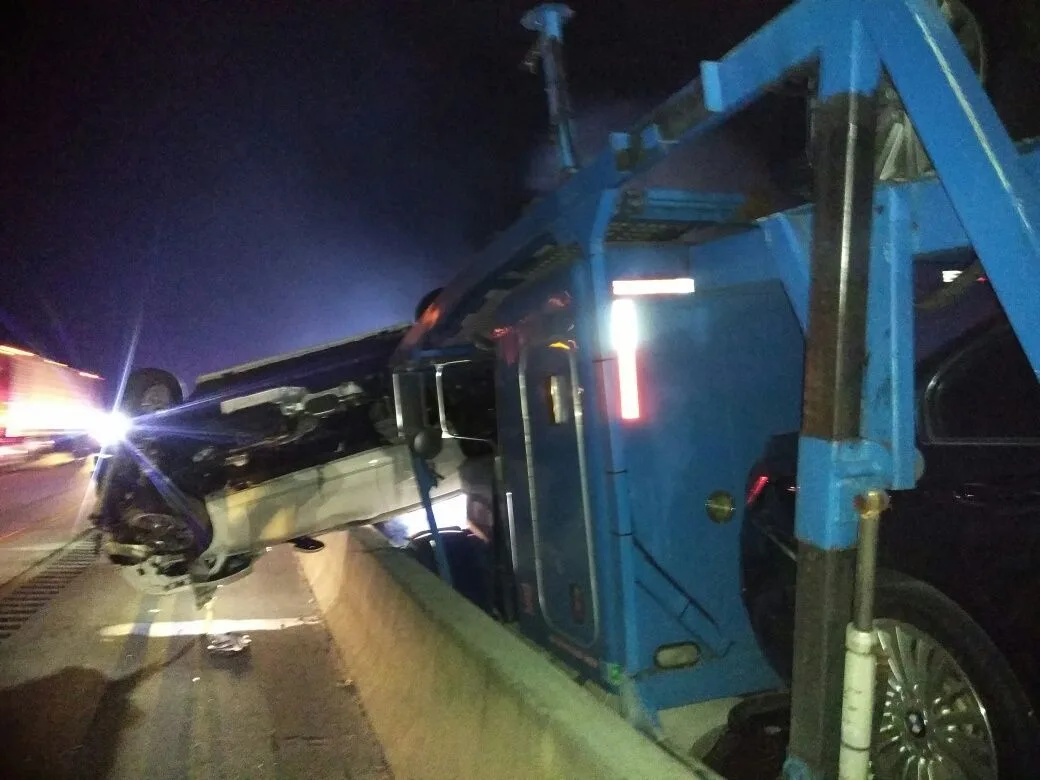
It also changes how the driver sets up on arrival. Getting a vehicle off a live road safely takes room, cones, lights, and a plan for where the truck sits while it works. Rushing that part is how a bad situation becomes a worse one. Our operators would rather spend ninety extra seconds positioning than hook fast and leave somebody standing in traffic. For anything that started with a collision, our Cocoa Beach accident and collision towing covers the scene work in more detail.
Getting Onto The Island When It Backs Up.
Cocoa Beach is a barrier island, and that shapes every emergency call here. Access comes over water. When a causeway or bridge approach stacks up, there is no clever detour that skips it, so the only real advantage is knowing which way to come from and when. Add a summer weekend, a beach day, and streets that let you in from one end only, and a stranger with a map is guessing while the meter of your day runs out.
Our people are not guessing. Because they work these streets weekly, a main road, a quiet residential block and a business lot behind a fence are all familiar ground, and the fastest approach to each is already settled before the truck pulls out. Minutes come off the clock for that reason alone. It also makes recoveries possible here that a company from somewhere else could not plan, since the plan turns on knowing where a wrecker fits and where it will never fit.
So we ask for detail. Which side of the road. What is behind you. Whether the drive you are parked in has a second way out. The more specific you are, the less time we lose circling. If your situation reaches past the island, the same crew covers the rest of Brevard County and the wider service areas the company runs.
What To Do While The Truck Is Coming.
The wait is the part people handle worst, so keep it simple. Hazards on. If the vehicle still moves under its own power and there is a safe place within a few seconds of travel, use it, because a parking lot beats a shoulder every time. If it does not move, leave it where it is rather than trying to push it clear of traffic by yourself.
Then get yourself somewhere sensible. On a busy stretch, behind a barrier and away from the pavement is better than standing beside the vehicle, and nobody should be on the traffic side of a car for any reason. Pull out anything you cannot leave overnight: wallet, phone, keys, medication, the registration, whatever is in the trunk that matters to you.
- Flashers stay on: they are the cheapest warning you have, day or night.
- Stay reachable: keep the line clear so our driver can call as they close in.
- Know your handoff: decide where the vehicle is going before the truck arrives.
- Grab your things: personal items come with you, not to the yard.
- Say what changed: a new location beats an old one on every call.
If the trouble turns out to be a battery, a flat, or keys locked inside, say so early. Sometimes a truck is not what you need at all, and our Cocoa Beach roadside assistance gets you moving again without a tow. Riders in the same spot should look at motorcycle towing built for bikes, and anything bigger than a pickup belongs with heavy-duty towing and recovery.
Night Work, Big Vehicles, Straight Numbers.
After dark the job changes. Lighting comes first, before a strap or a chain touches anything, because an operator who cannot see the underside of your car cannot protect it. Traffic behaves differently at night too. People are moving faster, seeing less, and reacting later, so our drivers set up wide and work deliberately rather than fast.
Size is the other variable. Light-duty cars and SUVs are the bulk of it, but the fleet also handles work vans, motorcycles, semis, buses, RVs and heavy equipment, so an emergency involving something large is a matter of sending the right unit rather than making calls to find one. Tell dispatch what is stuck and the truck that matches it is the one that comes.
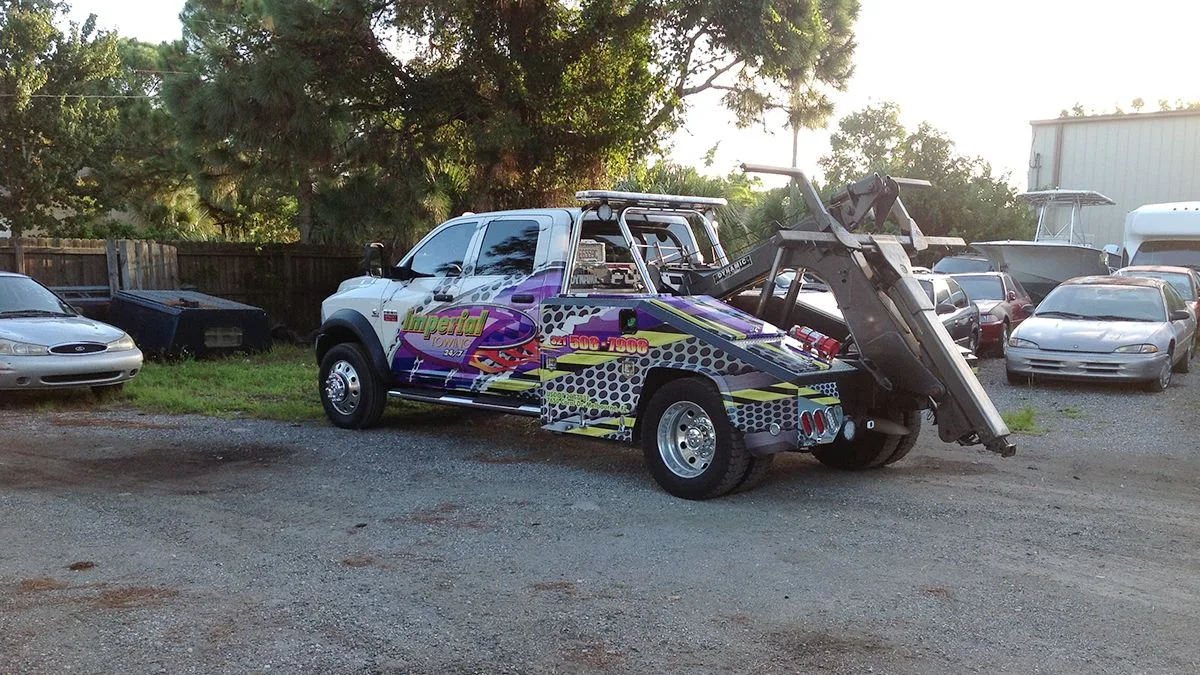
Whatever rolls out is chosen from what you told us on the phone, never from whatever happened to be sitting idle. A well-kept fleet is the quiet half of a fast response, because a truck that is ready is a truck that leaves immediately, and one that needs attention first costs you the whole delay before it even reaches the road. You can see the equipment at work in the photo gallery.
The operator matters as much as the machine. Everyone who rolls out is certified and used to working live roads at any hour, and that experience shows up in the small things: where the truck parks, how your vehicle is secured before it moves, and how fast a lane opens back up once the load is on. None of that is visible on an invoice, and all of it is the difference between a clean job and a second problem.
Money gets settled before we roll. You will hear a straight, no-surprise price on your tow up front, based on the vehicle and the distance, so nothing appears at the end that was not said at the beginning. A large share of our Cocoa Beach calls come from repeat customers, and that only happens when the number you were quoted is the number you pay. If you would rather put it in writing, use the contact form and we will answer.
Sitting on the side of a Cocoa Beach road right now? Do not wait it out. Ring (321) 499-4610 and a truck starts moving.
Cocoa Beach Emergency Questions.
How quickly does a truck get to me in Cocoa Beach?
Do you run emergency calls overnight in Cocoa Beach?
Should I stay in the vehicle while I wait?
Does island traffic slow your response down?
What will an emergency tow run me?
Can you handle something bigger than a car?
Stuck on the island tonight? Say The Word.
Dispatch answers 24/7, every day of the year. Tell us what you drive and where you stopped, and a certified Imperial operator heads for Cocoa Beach with the truck that fits the job. You get the price before we roll, the vehicle handled carefully, and a lane cleared without drama. Twenty-eight years of Brevard County calls stand behind every one of them.
Browse the fleet and recent recoveries in the photo gallery.