
Big Rigs, Small Island. One Crew Who Fits.
Semis, coaches, motorhomes and heavy equipment lifted off the Cocoa Beach barrier island by certified operators with the right wrecker, any hour of any day.
Heavy
Weight Is A Different Problem Out Here.
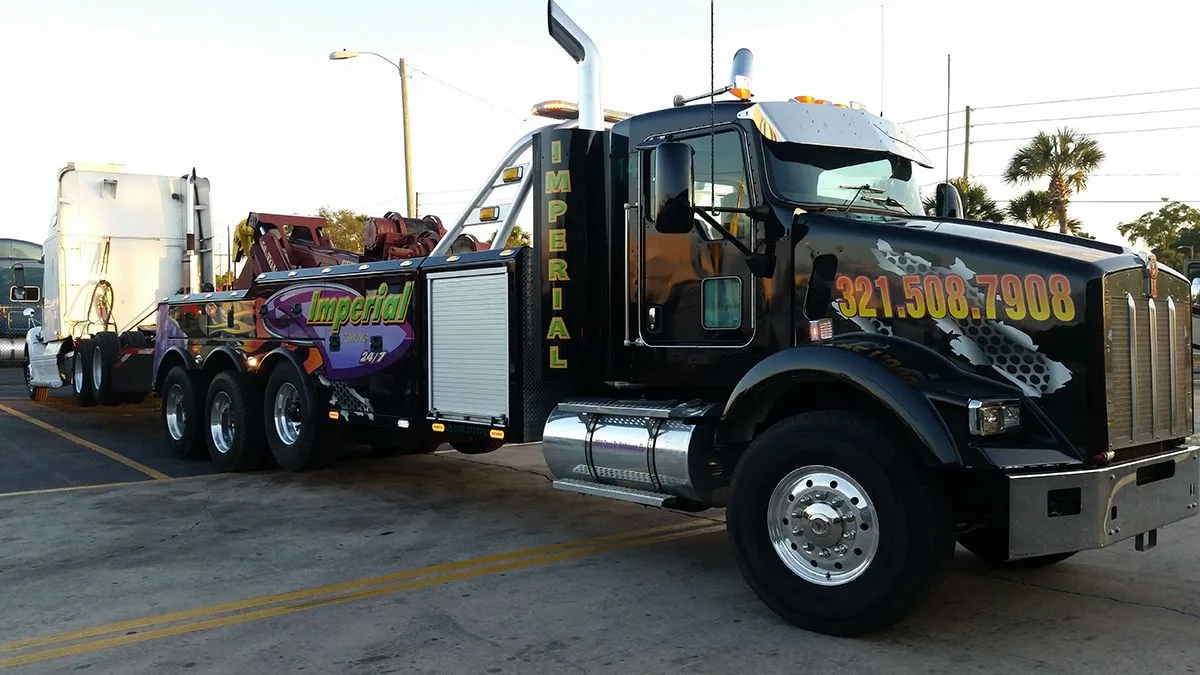
A barrier island is a narrow place to have eighty thousand pounds quit on you. Everything that reaches Cocoa Beach reaches it over water, and everything that leaves has to go back the same way. When the thing that stopped is a tractor-trailer, a motorcoach or a trailered excavator, the ordinary options thin out fast. Imperial Towing keeps the heavy fleet that does not thin out with them, and we have been answering Brevard County for 28 years with certified operators and equipment we keep in shape ourselves.
Light-duty work forgives a lot. Heavy work forgives almost nothing. Load a coach wrong and you bend a frame rail nobody can straighten. Rig a lift from the wrong point on a box truck and the body separates from the chassis while it is in the air. Our crew runs semis, buses, motorhomes and heavy machinery alongside cars and pickups, so the person who answers your call already knows which of those two worlds you are standing in and sends accordingly.
Bridges, Clearances And The Route Nobody Planned.
Getting to the island is a route problem before it is a recovery problem. Weight limits, posted clearances and the plain physical width of a crossing all decide which unit can come and which one has to stay home, and a wrecker that cannot legally or physically make the trip is worth nothing to you. Working that out in advance is why our first questions cover your surroundings as closely as they cover your breakdown.
The same arithmetic runs in reverse once the vehicle is hooked. A disabled rig that came in loaded is heavier leaving than a rescue truck alone, and the combined length of wrecker plus casualty has to clear every turn between the scene and the mainland. Operators who run Cocoa Beach roads every week carry that map in their heads instead of discovering it at a corner with a bus on the hook. Being local shaves minutes off arrival, and on a job this size it also prevents the wrong-way trip that costs an hour.
None of that guesswork lands on you. Tell us what you are driving, how it stopped and roughly where it sits, and the routing is our problem from that point on. Reach us at (321) 499-4610 and the planning starts while you are still on the phone.
What A Rotator Actually Does On A Scene.
People hear rotator and picture a bigger tow truck. It is closer to a mobile crane that can drive itself home. The boom turns to the side and works at an angle rather than only straight off the back, which means the truck can sit on the pavement while the reach goes somewhere the truck cannot follow: past a guardrail, over soft ground, around the back of an overturned trailer.
On an island shoulder that reach is frequently the whole answer. A conventional heavy wrecker has to line itself up behind the casualty, and if there is nowhere to line up, there is no recovery. A rotator plants once and works the scene from that spot, which shortens how long anybody stands in a live lane. Underneath the boom the same fundamentals apply: rated chain, correct lift points, air-cushion work when a coach or trailer is on its side and needs to come upright before it can be towed at all.
The trade-off is that a rotator is a large unit with real access requirements, so it is not automatically the right call. Sometimes the answer is a straight heavy wrecker; sometimes it is a lowboy and a winch. Choosing between them correctly, from the description you give on the phone, is the part of the job that happens before anyone starts an engine.
When The Shoulder Runs Out.
Beach roads were laid out for people going to the beach. Sand or a seawall often starts where the asphalt stops, and a box truck that dies in that spot occupies a lane it cannot be pushed out of. Buses and RVs are the same story with more length: a coach parked crooked can block a turn completely, and a fifth-wheel that jackknifes takes up two lanes and both shoulders at once.
So a heavy recovery here is a traffic job as much as a lifting job. Our operators think about the closure before the hook, positioning the wrecker so it shields the work rather than adding to the obstruction, then coordinating with whoever is managing traffic so the road opens once and stays open. On a corridor with no second route, a recovery that drags becomes everybody’s afternoon. We would rather take a few extra minutes staging correctly and then do the whole lift inside one closure.
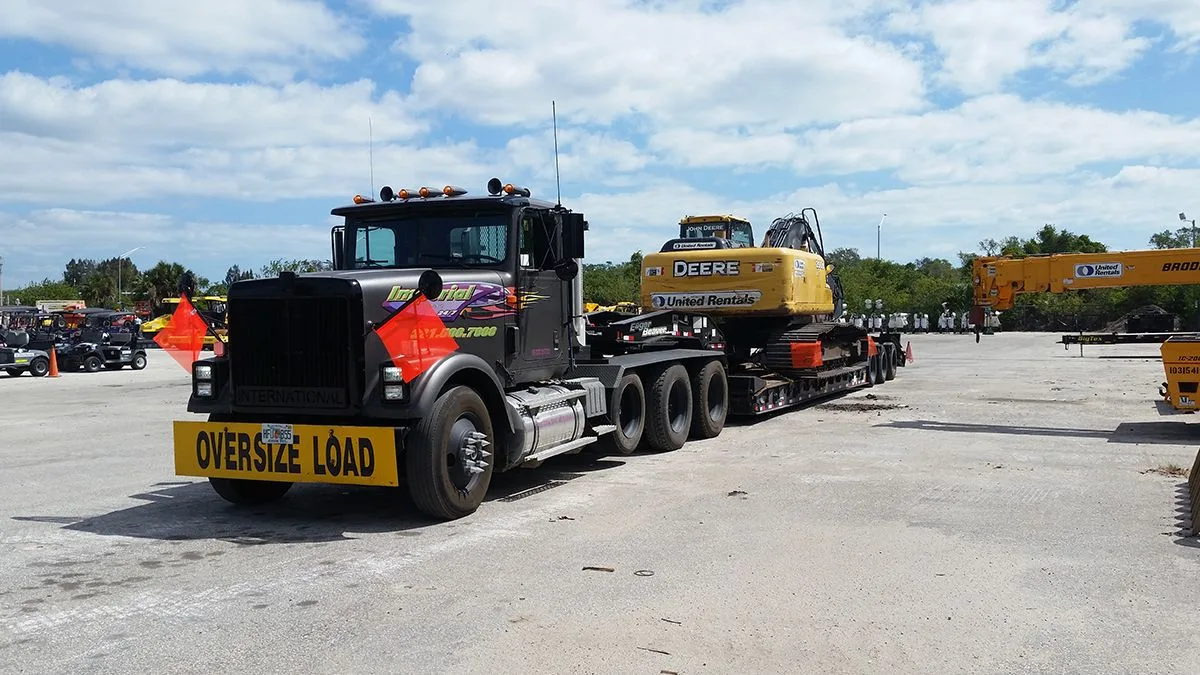
Equipment transport plays by the same rules. An excavator or a skid steer that needs to reach a beachside site travels on a lowboy through the same clearances, so the load has to be planned rather than simply hitched. It is the identical discipline whether the machine is broken or perfectly healthy and just needs a ride.
Why The Wrong Truck Makes It Worse.
The most expensive heavy job is the one that gets attempted twice. An undersized wrecker that arrives, tries, and has to phone for help burns an hour of lane closure and leaves the caller exactly where they started, minus the daylight. Worse, an operator working past the rating of the truck under him can drop a load, and a dropped load on a narrow island road is a far bigger incident than the breakdown that started it.
That is the reasoning behind how we run: our own well-kept fleet, our own certified operators, and a dispatcher who would rather ask two more questions than send the wrong unit. Heavy and long-distance work is core to what Imperial does, so no job is too big or too far, and the vehicle that leaves the yard is chosen for your situation instead of chosen for being available.
- Sized to the crossing: the unit is matched to the route onto the island as well as to the weight waiting at the end of it.
- Rotator and heavy wrecker capability: side reach when the shoulder is gone, straight recovery when it is not.
- Coaches, semis, RVs and machinery: the full heavy roster, plus light-duty when the call turns out smaller than expected.
- Certified operators, fleet kept ready: trained people on equipment we maintain, not borrowed trucks.
- 28 years across Brevard County: local crews who run these roads weekly and know them before they arrive.
Whether something is blocking a lane right now or you want Imperial saved as your heavy number before it happens, one call covers both. Send us the details or dial and we will get a unit moving.
More Help In Cocoa Beach
Emergency Towing
A real person answers and the right truck rolls, any hour of any day.
See the details →Accident Towing
Scene secured, wreck loaded carefully, lane cleared so traffic moves again.
See the details →Roadside Assistance
Jump starts, lockouts, tires and fuel, so a small problem stays small.
See the details →Motorcycle Towing
Soft straps and an upright load, so your bike arrives unmarked.
See the details →All Cocoa Beach Towing
Everything we run for drivers on the island, light-duty through heavy.
See the details →Brevard County
One local crew covering the whole Space Coast, mainland and beaches.
See the details →Heavy-Duty Questions.
Can a heavy wrecker actually get onto the Cocoa Beach island?
What is the difference between a rotator and a standard heavy wrecker?
Do you recover buses and RVs around Cocoa Beach?
Who closes the lane while you work a heavy recovery?
What will a heavy recovery in Cocoa Beach cost?
Are you available for heavy calls overnight on the beach?
Not every heavy call starts with a breakdown. A machine that has finished a beachside job still has to leave, and an oversize load headed anywhere in Florida still has to be routed, permitted and secured properly. Our lowboys handle that planned side of the work with the same crew and the same attention, and because we run long-distance too, the trip does not have to end at the county line.
Eighty Thousand Pounds Sitting Still? Let’s Move It.
Tell us what it is and where it sits. We will pick the unit that fits the route, quote you a straight, no-surprise price on your tow, and put a certified operator on the road to the island. Heavy recovery and long-distance hauling, 24/7, every day of the year, from a company that has answered Brevard County for 28 years and knows the ground before it arrives. See the rest of what we run on the Cocoa Beach page, or send us the details and we will call you back.
See the heavy fleet working in the photo gallery.