
Cocoa’s Big Vehicles, Matched To The Right Truck.
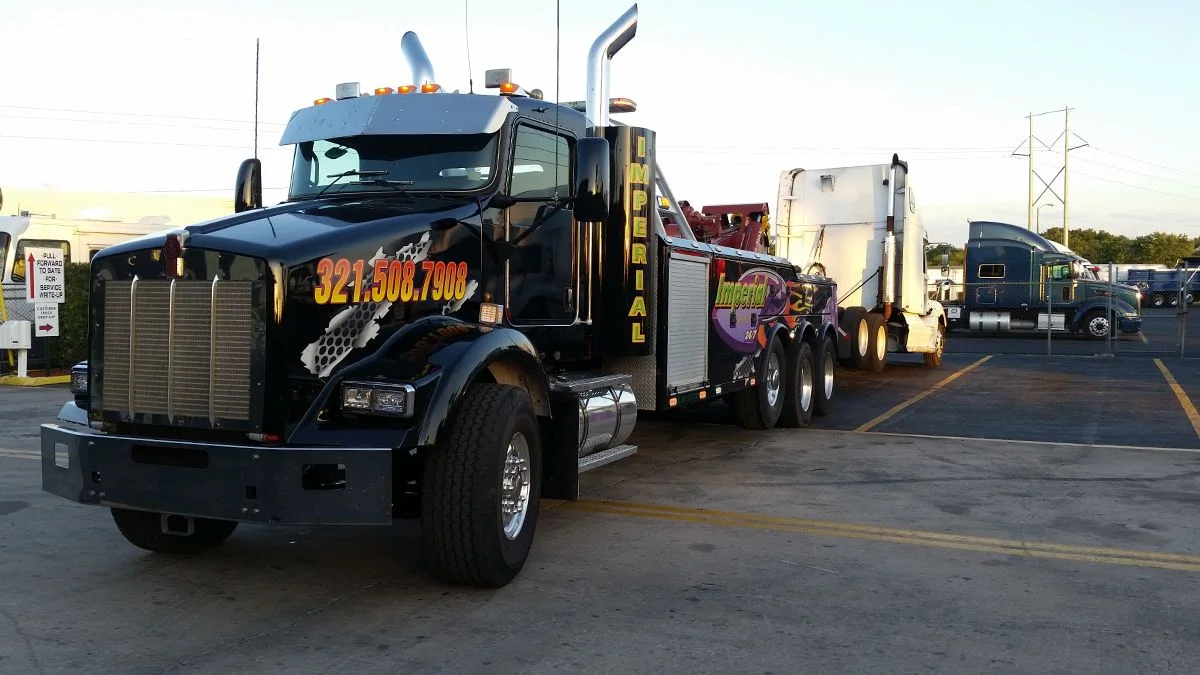
When a semi, a bus, or a motorhome quits anywhere in Cocoa, the first decision is which truck to send, and a wrong guess costs everybody time. Imperial Towing runs heavy wreckers and lowboy trailers across Brevard County and the rest of Florida, with certified operators on the road and dispatch answering 24/7.
Heavy
Big Vehicles On Cocoa’s Main Roads.
Semis making deliveries, buses, motorhomes with a car hitched behind, work trucks hauling equipment: big vehicles pass through Cocoa every day. When one of them stops in a travel lane it takes up more road than any car could, and the traffic trying to get around it has very little room.
Heavy calls are where a tow company finds out what it really owns. Our fleet covers the whole range, from light-duty flatbeds and wheel-lifts up through heavy wreckers and lowboy trailers, and we have been moving big vehicles around Brevard County for 28 years. When you call about a semi, the equipment that shows up was built for a semi.
A heavy breakdown also tends to be slower and more complicated than a car on the shoulder. The vehicle may be loaded. The driver usually has a schedule and a dispatcher of their own waiting for news. Our certified operators are used to working a busy road with a second phone call going on beside the truck, and they keep you told what is happening. If a car was involved too, our Cocoa accident towing crew works the same scene.
Four Answers Pick The Truck.
When you call about a big vehicle, dispatch asks four things before anything moves. What you are driving. Exactly where it is. Whether the wheels still roll and steer. Whether anyone is hurt. On a car call those answers mostly set the urgency. On a heavy call, each one also rules equipment in or out.
What you drive tells us the weight class and the length. A box truck and a loaded tractor-trailer are both trucks to somebody driving past, and they need very different wreckers. If you know it, give us the make, the setup, and whether a trailer is attached and loaded.
The exact location tells us how the truck can approach and where it can set up without blocking more of the road than the breakdown already does. Rolling and steering tells us whether the vehicle can be lifted and towed on its own wheels or has to ride on a trailer. An injury moves the whole call up, with emergency services first.
Those four answers decide which truck leaves the yard. Getting them right on the phone is the surest way to avoid a second trip, and a second trip is what really burns time on a heavy job.
Heavy Wrecker Or Lowboy Trailer?

A heavy wrecker lifts one end of a big vehicle and tows it on its remaining wheels, much the way a smaller wheel-lift handles a car, only built for far more weight. It is usually the right truck for a semi tractor, a bus, or a motorhome whose running gear is still sound. It can hook up in a tight spot and get a disabled vehicle out of a lane quickly.
A lowboy trailer is a long, low deck that the whole load drives or winches onto, so nothing touches the road on the trip. That matters when the drivetrain is damaged, when towing on the wheels could hurt the transmission, or when the thing being moved was never meant to roll down a highway in the first place, like a crane or a tracked machine.
Sometimes the answer is both: a wrecker to pull a vehicle clear of a bad spot, then a lowboy for the ride. The operator on scene will tell you which they are using and why before a single strap goes on. If you are not sure what your vehicle needs, describe it and let dispatch make the call.
- Heavy wrecker: lifts and tows a big vehicle whose wheels still roll and steer.
- Lowboy trailer: carries the whole load, for damaged drivetrains and equipment.
- Long runs: loaded in Cocoa, delivered anywhere in Florida.
- Secured sites: drivers badged for Patrick SFB, Kennedy Space Center, and Bay Center.
Equipment Headed Across Town Or Across Florida.
Plenty of heavy calls are planned. A piece of heavy equipment has to get from one job to another across town, or a machine has to cross the state. We handle long-distance and statewide heavy hauls start to finish, so the crew that loads it in Cocoa is the crew that delivers it wherever in Florida it is going. Our wider heavy-duty towing page covers the rest of that work.
Planned moves go better with a little notice. Tell us what the machine is, roughly how big it is, where it sits now, and where it needs to be. The operator can then bring the right trailer and the right tie-downs the first time, which beats finding out on arrival that the load is taller or wider than anyone mentioned.
Some heavy calls start behind a gate. Imperial drivers carry badging for Patrick SFB, Kennedy Space Center, and Bay Center, so when a large vehicle or a piece of equipment needs moving inside one of those secured facilities, the driver we send is already cleared to go in and do the work. Say so when you call, and dispatch will send a badged operator.
Plan The Drop Before The Hook-Up.
With a car, the destination can wait until it is on the deck. With a semi or a big motorhome, deciding late causes trouble. A regular repair shop may not have a bay tall enough or a lot big enough to take it, and a closed gate at the far end leaves a heavy truck sitting in the road with a load on it.
Motorhomes are their own case. Owners often travel with most of what they own on board, so the tow moves a home as much as a vehicle. Before the operator hooks up, they will want the slide-outs and leveling jacks fully retracted and any car behind it unhitched or accounted for. Mention all of that on the first call, along with where the coach needs to end up.
Buses need the same forethought. A breakdown with passengers aboard means getting everyone off safely and onto another ride before any rigging starts, and the owner usually wants the bus taken to their own yard or to a shop that works on that make. Tell dispatch whether anyone is still on board when you call.
So we ask early. Is a truck shop or a dealer expecting it? A company yard? Storage while the owner or the fleet manager decides what comes next? If the gate is locked when we arrive, you will hear from the operator whether a rig that size can be left there safely overnight, before anything comes off the trailer.
You will also know the cost before a truck leaves the yard: a straight, no-surprise price on your tow, worked out from the vehicle, the distance, and anything unusual about the pickup.
If a semi, bus, or coach of yours is sitting dead somewhere in town right now, the quickest help is a phone call to (321) 499-4610. Planning a move instead? Send dispatch the details ahead of time, and look over the other work we handle around Cocoa.
Before You Call About A Big Vehicle.
Can you tow a loaded semi out of Cocoa?
How do you decide between a wrecker and a lowboy?
Do you move RVs and motorhomes?
Can your drivers get onto Patrick SFB or Kennedy Space Center?
Will you haul heavy equipment outside Brevard County?
What should I tell dispatch about a loaded trailer?
Big Rig Down Near Cocoa? Tell Us What It Is.
Tell dispatch what the vehicle is and where it sits. A certified Imperial operator brings the heavy wrecker or the lowboy that fits, whether the job stays in Cocoa, crosses Brevard County, or runs to the far side of the state.
See our heavy trucks on real jobs in the photo gallery.