
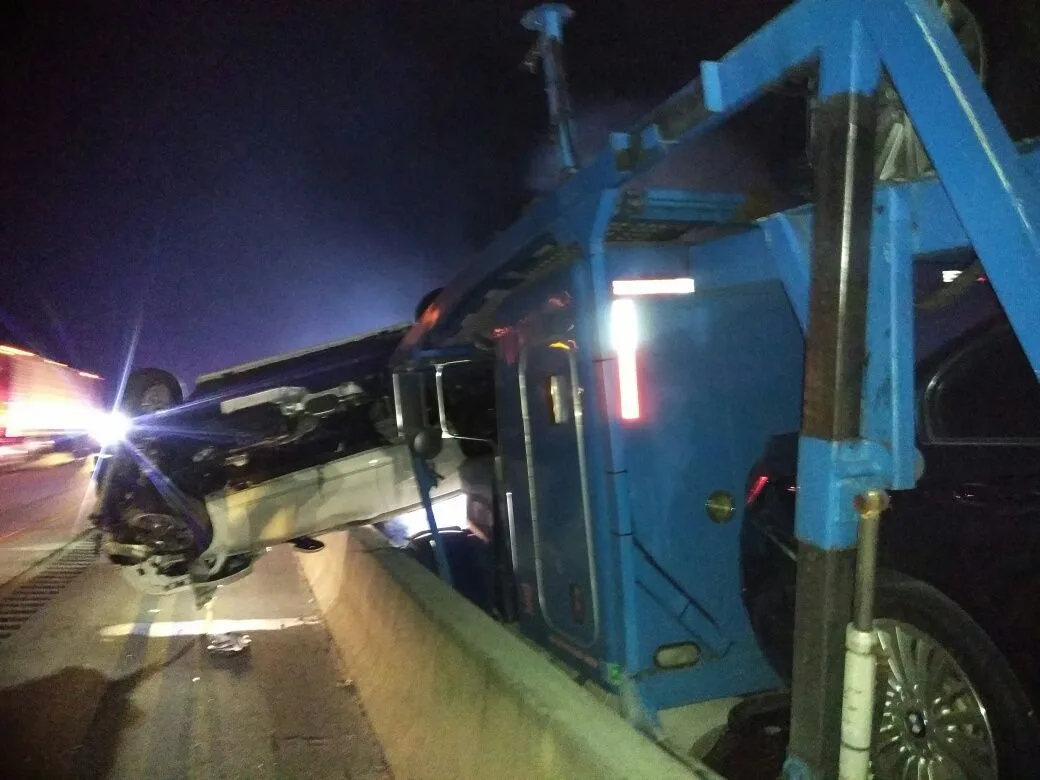
When The Load Comes Off Before The Truck Does.
Car carriers on their sides and flatbeds that dumped their freight near Winter Park and across Orange County. We secure and account for the load first, and the truck comes back up after it.
Freight
Freight On The Ground Changes The Whole Job.
Most heavy recoveries are about the truck. A cargo recovery is about what the truck was carrying, and that usually came loose first. Picture a car carrier lying against a barrier with vehicles still chained to the lower deck and one upside down on top. Or a box trailer where the pallets broke their straps and slammed into one wall, so nobody wants to open the doors. Or a flatbed that lost half its load across the shoulder before the driver could get stopped.
Each of those is a different job, and none of them starts by hooking up the tractor. The load decides how the unit can be lifted, how heavy it really is in that moment, and whether anybody can safely stand beside it. A carrier rolled with a full load aboard weighs far more on one side than a rigging plan for an empty unit would assume. Imperial has been doing heavy recovery for 28 years, and the recoveries that go badly tend to start with someone pulling on the truck while the freight is still free to move.
In Winter Park the freight moves on I-4 and US-17-92 just north of downtown Orlando, where heavy traffic slows and merges and a sudden stop can throw a poorly tied load forward. When you call, dispatch asks what the truck was carrying, how it is sitting and whether it blocks a lane. Those answers tell us whether a heavy wrecker alone will do or the job wants a rotator, air bags and extra chains, so the crew shows up with a plan instead of building one on the shoulder.
Scene, Then Freight, Then The Unit.
The sequence on a cargo scene does not change with the hour or with what spilled.
- The scene gets made safe with whoever is directing traffic. We find the officer or scene commander in charge and agree on the work area before a strap comes off the truck, and our wrecker parks where it shields the people on foot.
- The cargo gets secured where it sits, or it comes off. Vehicles on a carrier get extra chains or are unloaded one at a time. Pallets get strapped back against the wall or moved onto another trailer.
- Only then is the unit righted or towed, lighter and steadier than it was when we arrived.
One part of a cargo scene is never ours. If the freight is hazardous or something is leaking, the specialists the scene commander calls handle it. We do not clean it up and we do not pretend to. Our rigging waits until the area is turned back over to us.
Transload It, Or Tow It Loaded?
Transloading means moving the freight off the damaged trailer and onto a good one right there at the scene, usually a second trailer the carrier or the shipper sends out. It takes longer on the shoulder and it needs more hands, but it gives everyone a lighter unit to recover and a load that can keep traveling to wherever it was headed.
Towing loaded means the freight stays aboard and the whole unit goes to a yard or shop together. That works when the load is still tied down, the trailer can carry it without its walls or deck failing, and the weight sits inside what the recovery truck is rated for. A dumped flatbed nearly always gets reloaded before it moves anywhere. A carrier with crushed upper decks almost never tows loaded.
The carrier and the shipper both get a say in which way it goes. Dispatch will ask early whether a second trailer is coming, because that answer changes which of our units leaves Melbourne and what rides along with it. If nobody has decided yet, say so, and we will walk through both options with you before anyone commits to one.
Pictures Before Anything Moves.
Once freight is off the ground, somebody is going to argue about it later. The shipper wants to know what arrived damaged and what got damaged afterward. The carrier wants to show the load was tied down properly when it left the dock. An insurer wants both stories with photos attached. All of that depends on a record of the cargo as it sat before the first chain went on.
So our crew photographs the load in place: the vehicles on the deck, the pallets against the wall, the spill on the shoulder, the straps that held and the straps that let go. Then the rigging starts. If the shipper or the carrier has a representative coming who wants their own pictures first, tell dispatch, and the work waits for them. A few minutes with a camera can save a long argument about who broke what.
The Freight Goes One Way, The Truck Goes Another.
After a cargo recovery there are usually two destinations. The freight heads wherever the shipper wants it, whether that is on to its original delivery on a fresh trailer, back to a warehouse, or to a yard where someone can sort out what is still good. The damaged unit goes to the carrier’s shop, a dealer, or secure storage while the insurer looks it over.
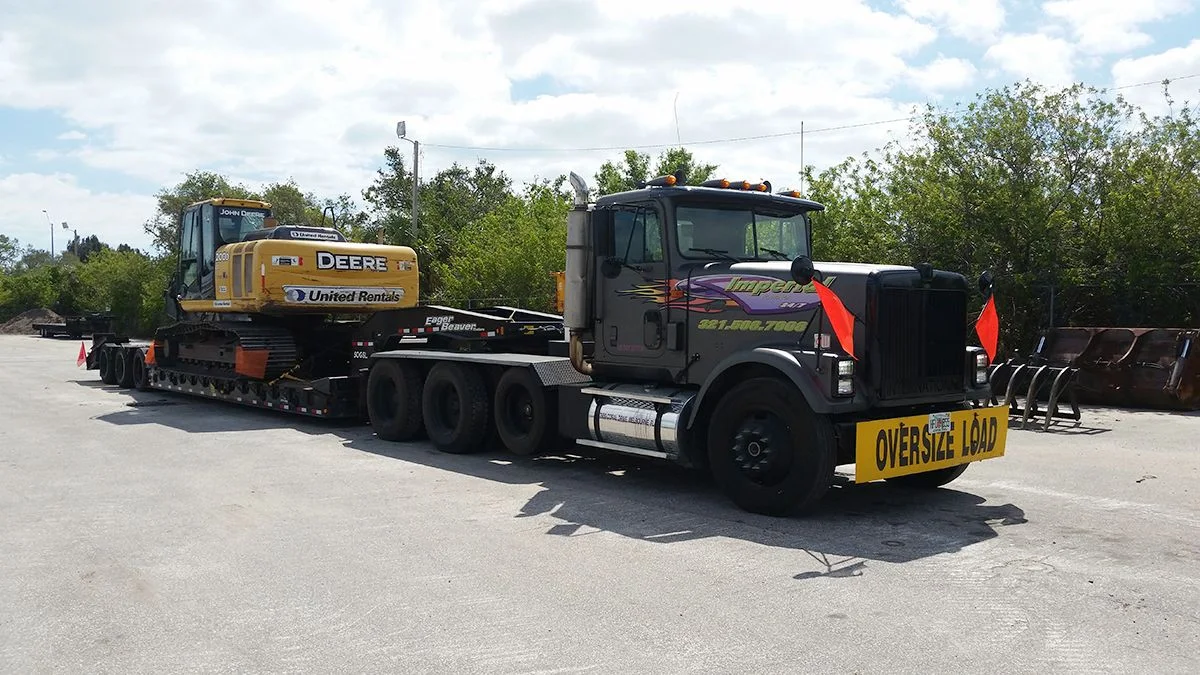
A unit that cannot roll on its own rides on a lowboy or behind a heavy wrecker, the same way we haul machinery across Florida. Tell dispatch both destinations on the first call if you know them. Winter Park is roughly 75 miles from our Melbourne yard, so a trip planned once beats a trip run twice.
There is more on how we handle this work on our cargo recovery page. If a load is down near Winter Park and the scene is under control, send dispatch the details and we will plan it with you.
More Recovery Work Around Winter Park
Step Van Towing
Walk-in delivery vans pulled off the route.
See the details →Oversize Load Transport
Permitted moves for loads past legal size.
See the details →Medium-Duty Towing
Box trucks and utility bodies, rated right.
See the details →Jackknife Recovery
Folded rigs straightened or split apart.
See the details →Winter Park Heavy Work
Everything heavy we run in Winter Park.
See the details →Orange County
Heavy recovery across the whole county.
See the details →What Shippers And Drivers Ask Us First.
Who decides whether the freight comes off before the truck is righted?
Can you recover a car carrier with vehicles still chained on it?
Do you clean up hazardous spills?
Who supplies the trailer when a load has to be transloaded?
Will you photograph the cargo before moving it?
How far do you travel for cargo recovery near Winter Park?
Cargo work near Winter Park is planned work for us. Because our yard is in Melbourne, an injury or a lane still open to traffic means Moving the freight onward usually means a second trailer meeting us at the scene. Tell dispatch early who is sending it and when, and we will have the load secured and ready to transfer by the time it backs in.
Load Down Near Winter Park? Tell Us What Shifted.
Describe the truck, what it was hauling and how it is lying, and whether a second trailer is on its way. Dispatch will tell you which unit leaves Melbourne, how long the drive runs and a straight, no-surprise price on your tow before anyone rolls. The rest of our heavy work in the area is on the Winter Park page, or write to dispatch online and someone will call you back.
See our heavy units on real jobs in the gallery.