

The lift is waiting on the truck
When a crawler crane moves between jobs, there is usually a crew on the other end with a lift on the calendar and a clock running. A late crane means idle hands and a schedule that slides for every trade behind it. That pressure is why a crane move gets planned well before the lowboy shows up. Our trucks start from Melbourne, a 71-mile run to Orlando, and crane hauls are exactly the kind of scheduled work that suits that distance. Here is what to have sorted first, in roughly the order we ask about it.
Start with what the crane weighs for the road
A crawler crane has two weights that matter: what it weighs set up, and what it weighs packed for travel. The second one decides the trailer. Counterweights often come off and ride separately, sometimes on a second truck, so the lowboy carries only the base machine and its tracks.
Give dispatch the make and model, the travel weight if the manual lists it, and what comes off for transport. If the crane owner has a transport plan from earlier moves, send it over. It shows how the machine was split before and how it was chained down.
No plan on file? That is common with a newer crane or a new owner. We will work it out together from the manual and the spec sheet.
The trailer then gets picked for the load. Axle spread on a long lowboy matters because the weight has to land across enough axles to stay legal and keep the tires healthy. Too few axles, or a load sitting too far forward or back, overloads one group. All of that is worked out on paper long before anyone climbs a ramp.
The boom travels stowed, every time
A crane boom is long, and it is the part people worry about most. On a crawler crane the boom is either lowered and laid along the load or taken down in sections, depending on the machine and the move. What it never does is ride improvised, propped on whatever happens to fit.
When the boom stays attached, it gets laid forward and rests on a support so it does not bounce or flex over bumps. Chains and binders hold it to the deck, and the tip gets flagged where it extends. Sections that come off are loaded and secured as their own pieces.
The tracks are chained at each corner, and the walk-around happens before the truck rolls and again after the first few miles, because a load settles once it starts moving. Our drivers treat that second check as part of the job. A crane that shifts on the trailer stops being a transport problem and becomes a recovery.
Getting in and out of a tight site
Crane jobs tend to sit in the tightest places: between buildings, behind a fence line on a cramped lot, at the end of a narrow access road. A long lowboy needs room to swing in, and it needs a way back out once it is empty.
Walk the access before move day if you can. Look for overhead wires, low branches, soft shoulders, sharp turns and anything parked where the truck has to pass. A photo or two of the gate and the approach goes a long way. If there is a better entrance for a long trailer, even one farther around the block, say so.
Then pick where the crane comes off. The unload spot needs firm, flat ground long enough for the ramps and room for the crane to track off and away. If it has rained hard that week, ground that held summer traffic may not hold a loaded lowboy, so plan for mats or a firmer staging pad near the entrance.
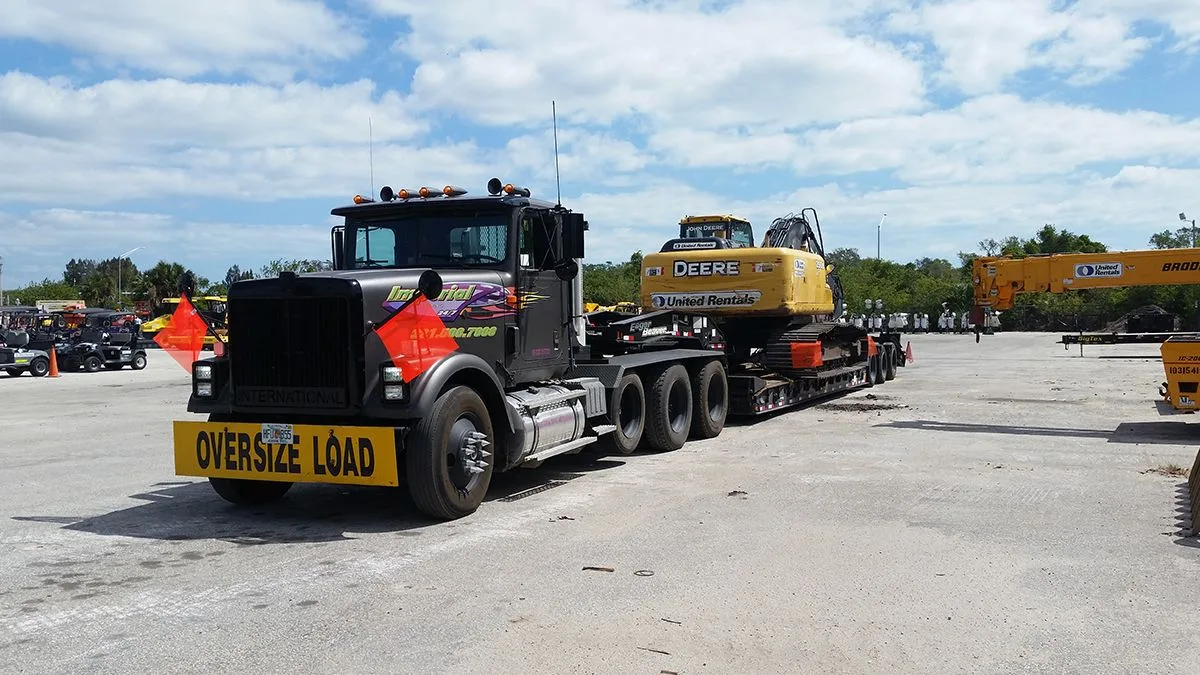
Lining up the drop with the crew
The best crane move is one where the crane arrives as the crew is ready for it, with the setup people on site and the lift going on as planned. Agree on a drop window that fits the lift, and tell us who will meet the truck and where the crane should sit when it comes off.
If the counterweights are traveling on a second load, the two trucks get timed so both arrive in the right order. A base machine sitting on site without its counterweight cannot work, and counterweight stacked in the wrong spot has to be moved twice.
Give dispatch the crew lead’s cell number along with the office line. On move day the driver needs someone at the gate who can answer a question about where to turn in, and the office rarely knows where the crane is supposed to sit.
Plans change. If the lift slides a day, call as soon as you know, so the run can be moved instead of turning into a crane parked on a trailer outside a locked gate. The crane transport page for Orlando shows how we plan these hauls, and tracked machines with a smaller footprint follow the same thinking on excavator transport.
Why crane moves suit a scheduled run
A crane move rarely starts with a panicked phone call. It starts with a calendar, a lift date and a crew that wants its machine on a set morning. That kind of planned work is what our range from Melbourne is built for.
Scheduling ahead leaves time to confirm the route, sort any oversize permits and banners, check clearances on the way in and line up the drop. It also means the price is set before the truck moves, with nothing tacked on at the gate.
If the crane is not yours, say who owns it and who has authority to release it. Many cranes are rented or owned by a separate company, and the site where one is parked may want paperwork before it leaves. Having that sorted before we arrive keeps the morning moving and keeps the driver from waiting on a signature.
Crane transport questions
Do the counterweights travel on the same truck as the crane?
Often they do not. On many crawler cranes the counterweights come off for transport and ride on a second load, so the trailer carrying the base machine stays within its weight limits. It depends on the machine and the trailer. Send the make, model and any transport notes from earlier moves, and dispatch will plan how the loads are split.
Can the boom stay on the crane during the move?
Sometimes. Some crawler cranes travel with the boom lowered and laid along the load on a support, while others have it taken down in sections. That depends on the length, the weight and the route. Either way, the boom is stowed and chained properly before the truck moves, and anything that extends past the trailer gets flagged.
What happens if the lift date moves?
Call as soon as you know. A crane move is scheduled work, and shifting the date early is far easier than turning a truck around at a site that is not ready. We will rework the timing with you, including any second load carrying counterweights, so both trucks arrive when the crew can use them and the crane comes off where they want it.
Put the crane on our calendar
Got a lift date? Phone (321) 499-4610 with the crane model, both sites and the window the crew needs. The Orlando service area page covers the other heavy work we run there, or write the move down for us and dispatch will follow up.