
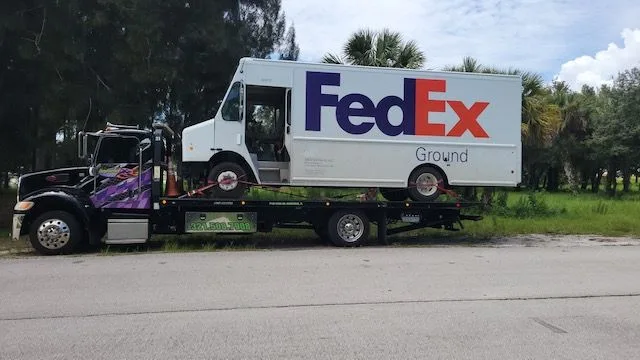
A stopped van stops a whole schedule
When a family car breaks down, somebody is late. When a work van breaks down, an entire day stops with it: the tools or parts or packages in the back, the customers waiting on them, and a crew suddenly with nowhere to be. A van that ran fine at seven can be sitting on a shoulder in Cocoa by nine, hazards blinking, with a full job list still taped to the dash. The owners who rescue that day make a handful of decisions quickly, inside the first half hour, and the rest of this page walks through them in order.
Get the van and the crew clear of traffic
Before any business decision, deal with the road. If the van still rolls, get it onto the shoulder or into a parking lot. If it will not move, hazards on, and nobody stands between the van and passing traffic. A van on a busy shoulder is a big target, and a crew member leaning into the side door to check on the load is standing exactly where a distracted driver drifts.
If the crew carries cones or a reflective triangle, set them out well behind the van, and only when there is a safe place to walk.
If the van is sitting in a travel lane, say so the moment dispatch picks up, because it changes the order of everything else. The same goes for a collision or anyone hurt, which comes before the van, the cargo and the schedule. Imperial works hand in hand with police and municipalities across the county, so the operator who shows up knows how to handle a scene properly if it turns into one.
Then look at the clock and the job list. The next thirty minutes decide whether this afternoon slips a little or falls apart, and a few questions settle which one it will be.
Roadside fix or a full tow
The first question is whether the van needs to go anywhere at all. Imperial roadside assistance covers jump starts, lockouts, tire changes and fuel delivery. If the van died after a dome light sat on through a long stop, a tire went flat, somebody locked the keys inside, or the fuel gauge was lying, a roadside visit may have it moving again without a tow.
Be honest with yourself about what you heard and felt. A starter that clicks with dim dash lights sounds like a battery. Grinding, a burning smell, steam from under the hood, a transmission that stopped engaging, or a warning light followed by a loss of power all sound like a shop. Describe what happened in plain words when you call, and dispatch will tell you straight which way it sounds.
A roadside fix that does not hold costs the day twice, once for the wait and again for the tow that follows. When the symptoms point to something mechanical, going straight to the tow usually keeps more of the afternoon intact.
Deciding what happens to the load
The cargo is often worth more to the day than the van. Decide early whether it stays with the van or moves to another vehicle. If you have a second van or a pickup that can meet the broken one, do that swap somewhere safe, a lot or a wide shoulder well away from traffic. When the load is fragile, perishable or promised to a job this morning, the swap usually wins.
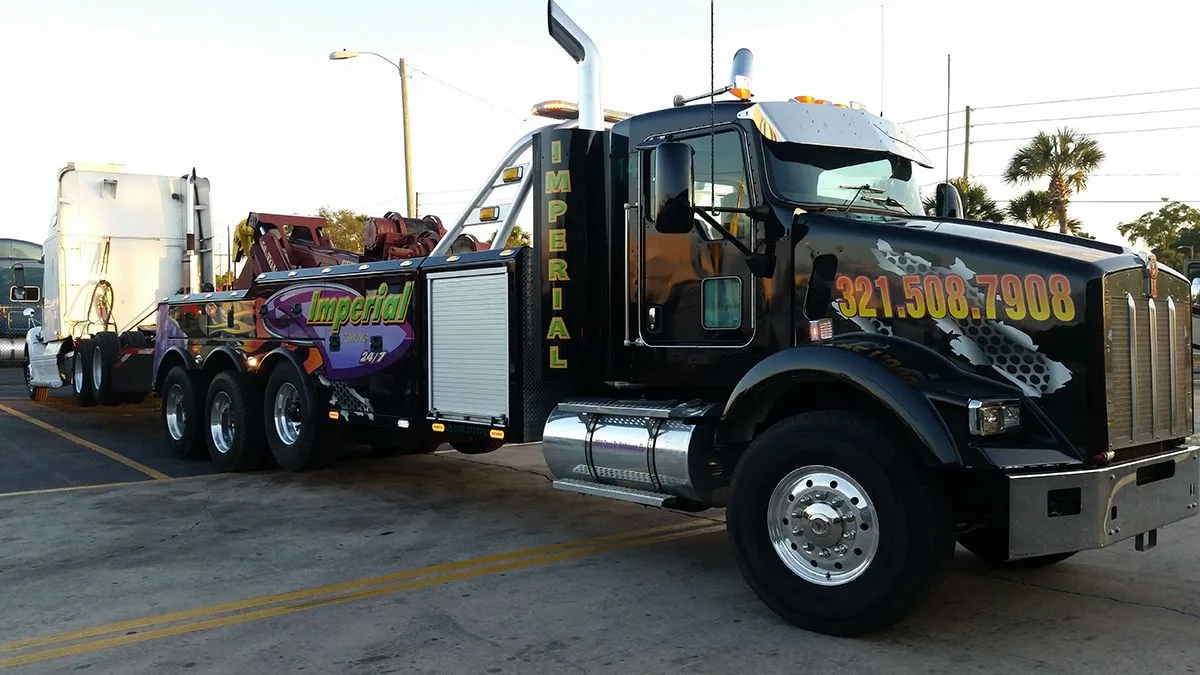
If the cargo can ride along, say so when you call, and give dispatch an honest sense of how heavily the van is loaded. A van full of tile, pipe or equipment weighs a great deal more than an empty one, and weight decides which truck comes out. Work vans sit on the Imperial fleet list alongside cars, SUVs, semis, buses and heavy equipment, with flatbeds, wheel-lifts, wreckers and lowboys to match them.
Lock the cargo doors before the van leaves, take anything small and valuable up front with you, and write down what was in the back while you still remember it all.
Which shop, and whether it can take the van today
Most business owners already have a shop they trust with their vehicles, and we take the van there. Before the truck arrives, call that shop. Tell them the van is coming and what happened, then ask whether they can look at it today. A shop booked solid for the week is not helping the schedule, and it is far better to learn that while the van is still on the shoulder than after it has been dropped in their lot.
If there is no regular shop, or yours cannot fit it in, dispatch can go over the usual choices with you. A dealer, a different shop, a storage yard or your own business lot all work. If the van is headed back to your yard to wait for a mobile mechanic, just say so.
Give dispatch the exact destination address and whether there is room for a truck to unload there. You hear a straight, no-surprise price on your tow before anything rolls.
Calling customers, then planning for the next one
While the van is being loaded, the calls to customers start. Tell them early and give them a real time, even a later one. A customer who hears at nine that the crew is coming after lunch is far happier than one who waits until eleven for a crew that never shows up. If another crew can cover a job, move them now, while there is still enough day left to shuffle things around.
Once the day is over, spend ten minutes on the next bad morning. Save the tow number in every work phone, not only the one in the office. Make sure every driver knows dispatch will ask a few quick questions, and that the first thing to have ready is exactly where they are. Keep the registration and insurance card in the van where a driver can actually find them.
Before the next breakdown, check that every driver has the number saved and knows to call it before calling anyone else.
What business owners ask us
Can the van be towed with the cargo still inside?
Often, yes. Tell dispatch roughly what is in the back and how heavily it is loaded, because weight decides which truck comes out. Secure anything loose so it does not shift, and lock the cargo doors. If the load is valuable or needed at a job today, moving it to another vehicle first may save more of the day than towing it along.
One of my drivers broke down and I am not there. What do they tell you?
The same four things anyone tells us: what they are driving, exactly where they are, whether the wheels still roll and steer, and whether anyone is hurt. Then give the destination, or say the owner will call with it. Dispatch can take that answer from you directly, so the driver does not have to make the business decision alone.
Do you handle vehicles bigger than a standard cargo van?
Yes. A step van rides on a flatbed, and heavier trucks go out with heavy wreckers built for the weight. Describe the vehicle and how it is loaded honestly on the call, and the right equipment gets sent the first time instead of a truck that has to turn around.
Before the next bad morning
Dispatch answers (321) 499-4610 at any hour. Emergency towing in Cocoa covers a van stuck in a lane, and light towing handles the smaller vehicles in a fleet. The Cocoa service area page has more on the crew in town, or send us your fleet details ahead of time.