
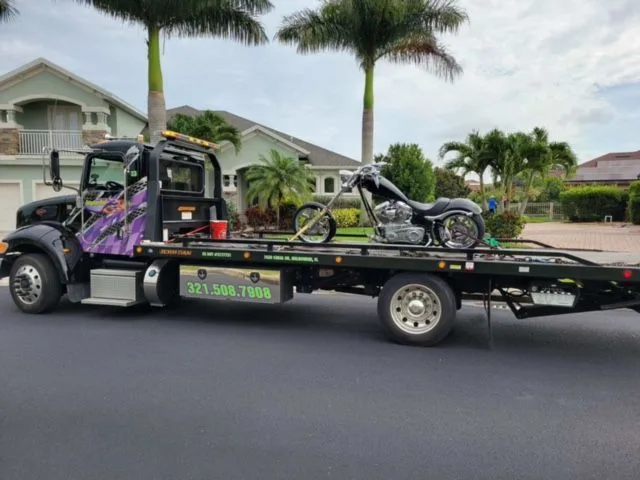
Being stuck away from home is a different problem
A local rider whose machine quits has a garage, a shop they already use, and somebody who can come get them. A rider who came down for a few days has none of those things, and that changes what the call is actually about. The mechanical part is the same. What is different is that you now need to decide where a motorcycle goes in a town you do not live in, while standing in riding gear in the sun, with a return trip you were planning to make on that machine. Twenty-eight years of Brevard County calls means the visitor version of this is thoroughly familiar territory here.
First, get yourself out of the heat
Waiting with a dead bike is a worse experience than waiting with a dead car and every rider who has done both knows it. There is no cabin, no shade and no fan, and a heavy machine cannot be pushed anywhere useful by one person in gear. So the first moves are about you rather than the bike.
Get the machine off a traffic lane if you can do that safely, then park it on solid ground rather than soft shoulder or sand where the stand will sink. Side stand down, transmission in gear. Then get yourself into shade and take the gear off, because standing in it in the afternoon sun turns twenty minutes into something genuinely unpleasant. If there is no shade at all where you are, say that when you call. It changes how the run gets sequenced.
Keep your phone free after that. The operator heading toward you may want thirty seconds of clarification, and a phone that is on a long call to somebody far away is the one thing that will slow the arrival down.
The decision a visiting rider has to make
Locals answer this instantly and visitors need a minute, so it is worth thinking through before you are standing in it. Realistically you have four destinations, and they suit different situations.
- A shop here, if the problem sounds like something fixable in a day or two and your schedule can absorb the wait.
- Where you are staying, if there is somewhere sensible to put it and you want to make the decision tomorrow instead of now.
- Secure storage, which is the honest answer when you genuinely have not decided and do not want to decide badly.
- Home, if the trip is over and the machine needs to go the distance rather than around the corner. Long-distance hauling is regular work here.
If you do not know, say you do not know. Holding a machine somewhere secure while you make arrangements is entirely normal and far better than naming a destination under pressure and then needing a second move to undo it. Deciding well tomorrow morning beats deciding badly this afternoon.
What actually happens to the machine
Riders are protective, reasonably so, and the specifics are worth knowing rather than guessing at. Everything that makes a car straightforward is missing on a motorcycle. There are no four contact patches keeping it steady, nothing a wheel lift can take hold of, and left unsupported the whole thing falls over onto the parts you least want damaged. So the equipment is different from the start.
The front wheel goes into a chock, and that is what holds the machine upright before any strap is involved. Soft loops then go around solid structure, and the ratchet connects to the loop rather than to your bike. Nothing tightens down across a tank, a fairing, a mirror stalk or a polished pipe. Compression is shared front and back so the forks are not sitting fully bottomed for the entire ride, and the load gets walked once more before the truck moves and again before it comes off the deck.
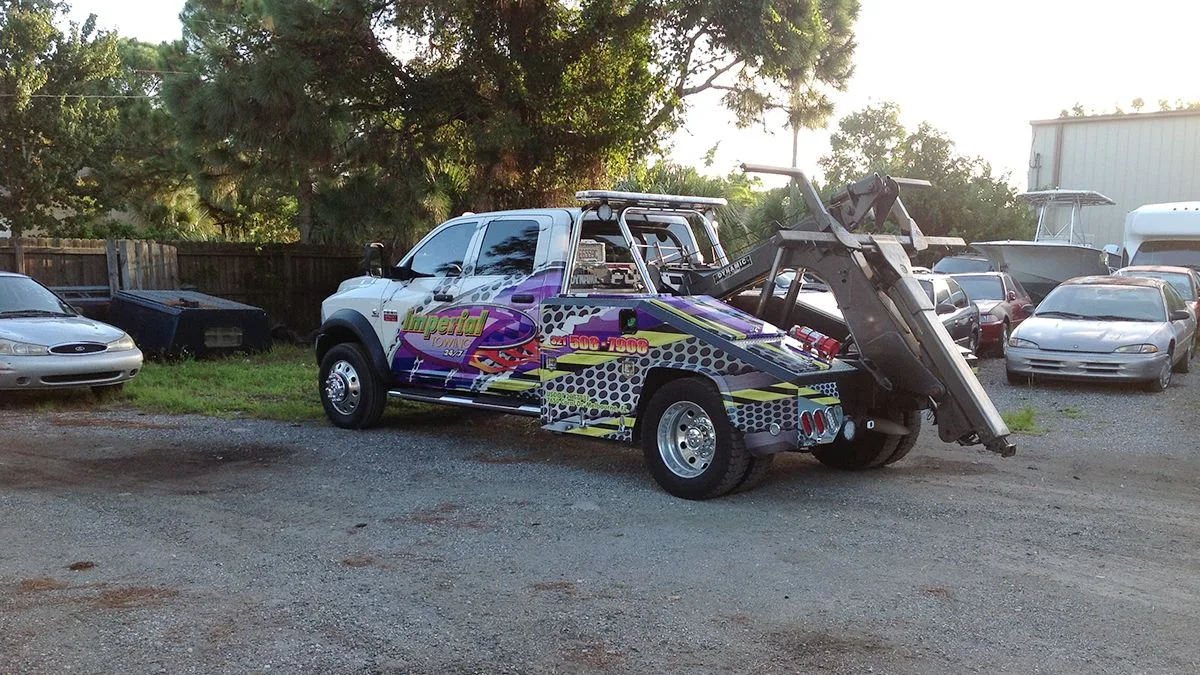
Certified operators is the other half of that. Motorcycles sit in the same fleet list here as cars, SUVs, work vans, semis, buses, RVs and heavy equipment, which means the person handling yours does it on real calls rather than once a season, and nobody is improvising with equipment borrowed from a car job.
Six things to have ready when you call
The call goes faster if you can answer these, and none of them require you to know what is wrong. Make and model, so we know the size and shape of what is being carried. Rough weight if you have any idea, because a stripped standard and a loaded touring rig differ by hundreds of pounds before you count bags, a top box and a full tank. Whether the front wheel and forks still turn freely, since a locked front end changes how the machine goes up the ramp. Whether it is standing or lying down. Exactly where you are, by cross street or landmark rather than a general neighborhood. And where it is headed, or that you have not decided.
Mention anything unusual while you have somebody on the phone. Aftermarket bodywork, a lowered suspension, a trike or a sidecar, a flat rear tire, no side stand, fuel on the ground. Three wheelers in particular change the arithmetic, because the rear track is too wide for a single chock and a conversion may carry bodywork that will not take a strap across it. None of that is a problem to hear on the phone. All of it is a problem to discover in the street.
Money is settled at the same time. You hear a straight, no-surprise price on your tow before anything rolls, tied to the machine and the distance, so a rider who is already having an expensive weekend is not handed a second surprise at the end of it.
Questions from riders passing through
Can the bike go somewhere and wait while I sort out a plan?
Yes, and it is a common request from riders who are away from home. Say so when you call and the machine goes somewhere secure rather than to a destination you picked in a hurry. Deciding properly the next morning, with a phone that has charge and a shop that is open, produces a better outcome than deciding on a hot sidewalk.
What should I tell you if the bike went down?
Say it plainly, because a machine that has been down loads differently. A bent lever, a folded stand or damaged bodywork can mean it will not hold itself up while anyone works around it. Mention anything hanging loose, any fuel on the ground, and whether the front wheel and forks still turn freely. All of it changes the gear that comes out.
I am on a rented machine. Does that change anything?
Only in who you talk to afterward. The pickup itself is identical: chock, soft loops, upright the whole way. Call whoever you rented from early so they know where the machine is going, and tell us the destination they give you. The handling of your bike does not change based on whose name is on it.
The number worth saving before the trip
Riders who tour save a tow number the way they save a weather app, and it costs nothing to do it now rather than one-handed on a shoulder. Dispatch answers any hour of any day on (321) 499-4610, and motorcycle towing in Cocoa Beach covers how the machine gets handled. If it is only a battery or a tire, roadside assistance may have you riding again, and a bike that went down runs through accident and collision towing. You can also send us the details.