
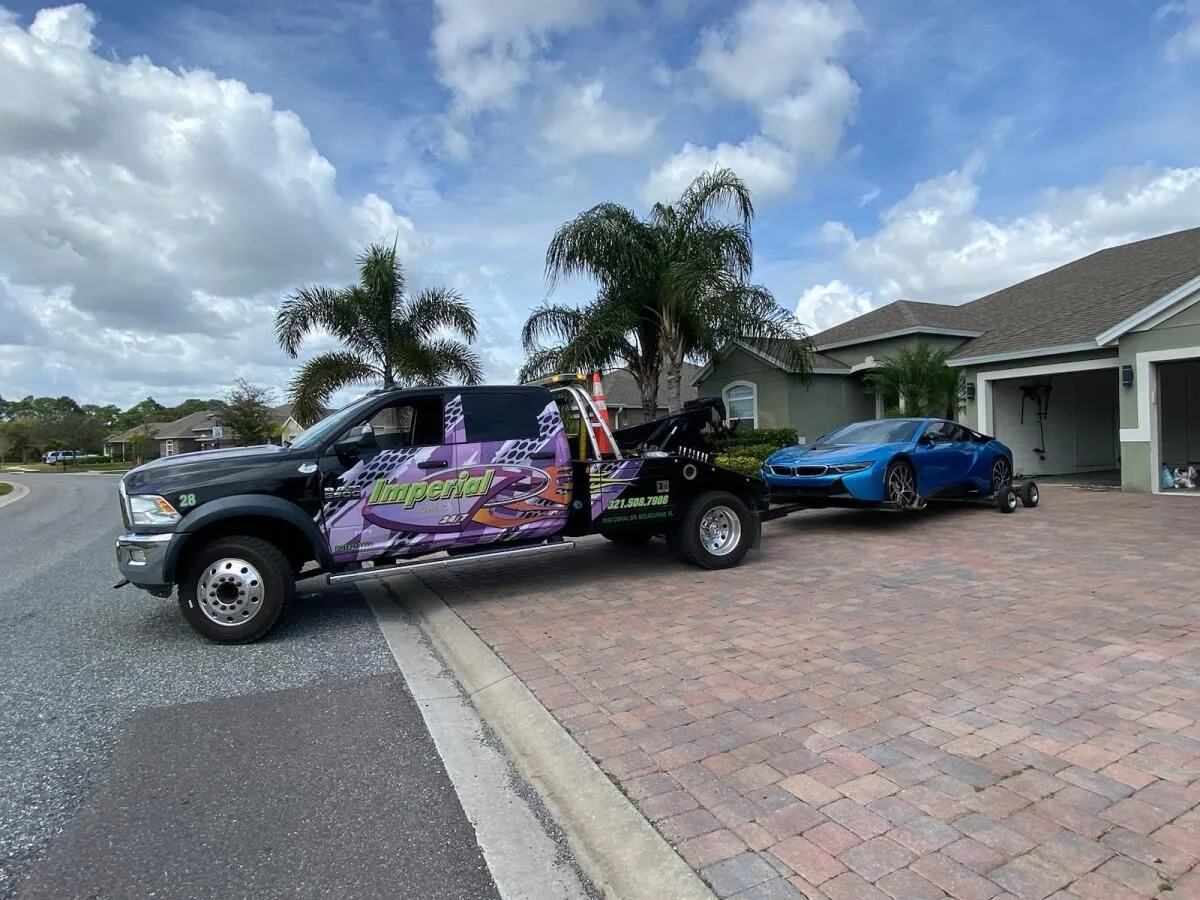
When the road turns into a pond
Anyone who has spent a summer in Cocoa knows the pattern. The sky looks fine at lunch, and by mid afternoon a storm has put standing water across the low spots on the roads through town faster than the drains can take it. Most drivers ease through. Some misjudge the depth, the engine coughs and quits, and they are left sitting in water with the key still in their hand. What happens in the next minute decides whether this ends with a tow and a dry-out, or a tow and an engine job.
What the engine is doing when it dies in water
An engine breathes through an air intake, and on plenty of cars that intake sits lower than people expect. When the car pushes into deep water, the intake can pull some of it in along with the air. Air compresses easily when a piston comes up. Water does not compress at all. That is why a flooded engine stops so abruptly: something inside it met a wall.
If water is the reason it stalled, some of that water may still be sitting where air belongs. Turn the key again and the starter forces the pistons up against it. Connecting rods bend, and it gets worse from there. A car that might have needed its intake dried and its fluids checked now needs a mechanic to open up the engine, which is a very different conversation at the shop.
The maddening part is that a second try feels reasonable. The car was running two seconds ago, you are sitting in a puddle, and the traffic behind you is honking. Leave the key off anyway, and keep it off until a mechanic has checked the engine for water.
The first moves from the driver seat
Turn the ignition off and leave it off. Put the hazards on while the electrical system still works, because a car stopped in water on a gray, rainy afternoon is hard for other drivers to pick out. Then look at the water around you honestly. If it is rising, moving, or climbing past the bottom of the doors, the car stops being the priority. Get out, get to higher ground, and leave it where it sits.
If the water is shallow and still, staying put is usually fine, and often safer than wading through water you cannot see into. A flooded road hides dips, curbs and open drains, and moving water during a storm is stronger than it looks from a car window.
Skip the idea of pushing it out yourself, too. A stalled car in water is heavy, the footing is slick, and other drivers are still trying to get through the same spot with their wipers on high. Once you are safe, make the call, and keep your phone charged and free so the operator can reach you.
Describing where the flooded car is sitting
Dispatch will ask a few quick questions, and during a storm the one that matters most is where the car is sitting and what the water around it is doing.
Give the road, the nearest cross street, and a business or sign you can actually see, then say which direction you were heading. A car sitting in a low spot is surprisingly hard to find through heavy rain, and a driver who knows to look for the dip just past a particular intersection gets there without circling. Mention how deep the water looks against the tires and whether it is still coming up. Say whether the car is at the edge of the road or out in the middle of the low spot, since that decides how the truck will have to approach it.
Tell us you have not tried to restart it, or tell us honestly if you did. Nobody on the phone will judge you for it, and the shop needs to hear it later.
If the car is stopped in a live traffic lane, say that before anything else, since a car blocking a lane gets handled first. You also hear a straight, no-surprise price on your tow before the truck rolls, so the money part is settled while you are still sitting there.
How a flooded car gets moved
A car that stalled in water rides to the shop with its engine off the whole way, and on most of these calls that means a flatbed. The car is winched up onto the deck with the key off, secured at the wheels, and carried without the drivetrain turning. Nothing inside the engine gets asked to move until a mechanic has had a look at it.
Expect the operator to take a minute before hooking anything up. They will read where the water sits, where the pavement edge is hiding, and where the car can be pulled onto solid ground. On a busy road in the rain, getting the car out of the lane comes first and getting it onto the deck comes second. Where the flatbed cannot get into position right away, a wrecker or wheel-lift may pull the car clear of the water before it is loaded, and the operator will tell you what is about to happen before it happens.
Stay out of the way while it goes on. A winch cable under tension, wet pavement and passing traffic are a bad mix for anyone standing close by.
Where it goes, and what to tell the shop
If you have a shop you trust, the car goes there. If you do not, dispatch can go over the usual choices with you: a dealer, a shop, a storage yard, or your own driveway. If the destination has closed by the time the truck arrives, dispatch will tell you before the car is dropped anywhere.
When you talk to the shop, give them the same facts you gave us. The car stalled in standing water, roughly how deep it was, and that the key went off and stayed off. That last detail tells the mechanic to check the intake and the oil for water before anyone tries to start it, which is the entire point of not cranking it on the road.
Before the car leaves, take out the insurance card, the registration and anything valuable, especially if water got into the cabin. Wet carpet in Florida heat starts working against you by the next morning, so mention it to the shop along with everything else.
Flooded car questions we hear
The engine started again after it stalled. Is it fine?
Maybe, and maybe not. Some cars stall from a wet ignition and start again once things dry out. Others restart and run rough because water already got where it should not be. If it knocks, smokes or shakes, shut it off and call. If it seems normal, still tell your shop it went through water so they check the oil and the intake.
Should I wait for the water to go down before I call?
Call now and tell dispatch the water is still up. Standing water from an afternoon storm often drains away, but you do not have to guess about that alone. The operator can plan the pickup around the conditions, and somebody who knows exactly where you are is working on it while you wait somewhere safe and dry.
Will you tow a car that took water inside the cabin?
Yes. Water on the floor does not change how the car rides on a flatbed. Tell dispatch when you call so the operator knows what to expect, and take your documents, electronics and anything else you care about out before it leaves. Your shop and your insurer will want to know how high the water got, so a photo of the line helps.
Save the number before the next storm
Put (321) 499-4610 in your phone now, while it is dry outside. Dispatch answers any hour of any day, and emergency towing in Cocoa covers the calls that cannot wait. For a stalled car headed to a shop, flatbed towing keeps the drivetrain still the whole way. The Cocoa service area page has more on the crew in town, or you can send us the details.